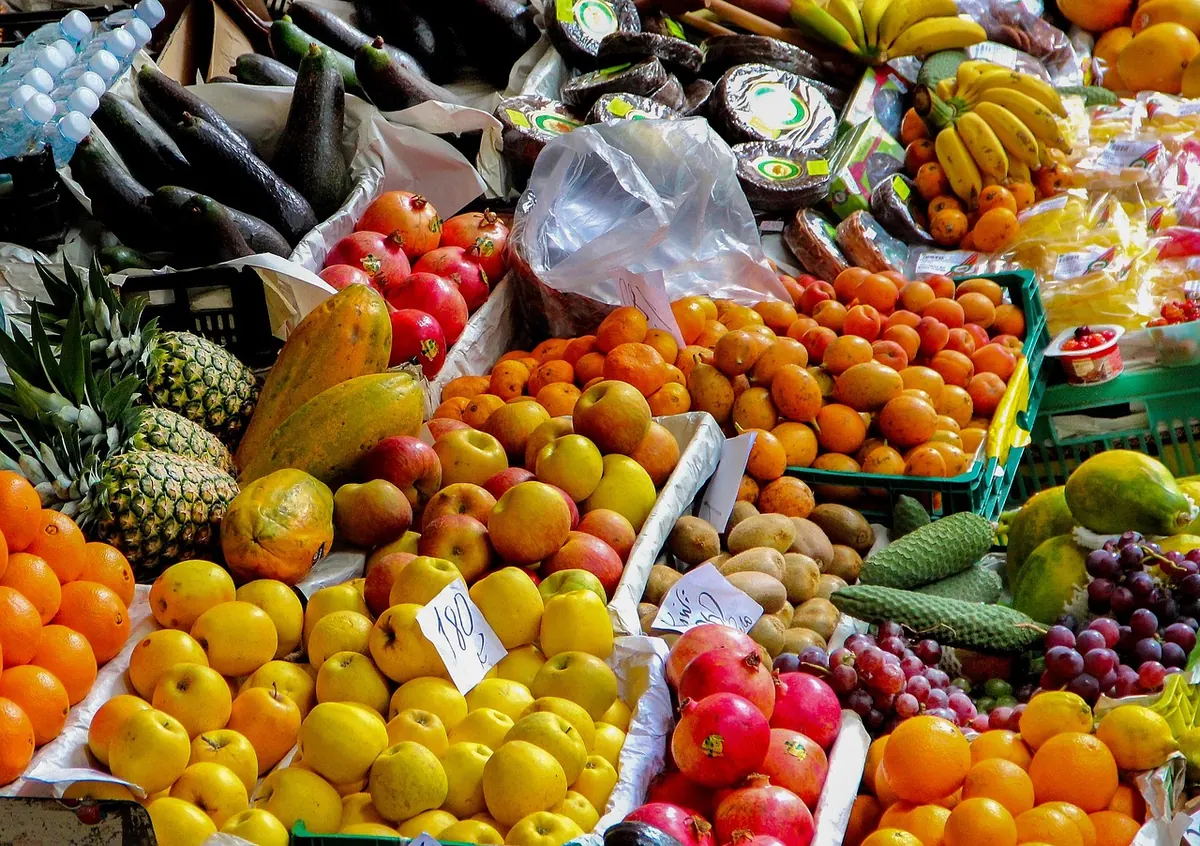
Anyone can compare the price of a bag of carrots. The harder question, and the one that actually decides where a Bury household does its weekly shop, is what happens when price, freshness and time all sit on the same page. A market stall and a supermarket aisle sell similar things in very different ways, and the difference shows up in your Saturday, not just your receipt.
What follows is a working method rather than a verdict. Prices shift with the seasons, the weather and the stall, so treat any figure here as a placeholder and run the numbers on your own basket. The point is to know what you are trading away when you choose one over the other.
What a standard family basket actually contains
Most weekly shops for a household of three or four fall into two halves, and those halves behave very differently depending on where you buy them.
- Fresh and loose: potatoes, onions, carrots, salad, fruit, a joint of meat, fish, bread, eggs, cheese.
- Packaged and branded: cereal, pasta, rice, tinned goods, cooking oil, washing-up liquid, toilet roll, pet food, frozen items.
The first half is where a market can genuinely compete. The second half is where it often cannot, and pretending otherwise makes the whole comparison useless.
Price: where the stalls pull ahead
Market stalls sell loose by weight, which is a quiet advantage. If a recipe needs four carrots, you buy four carrots. Nothing wilts in the drawer because it came in a sealed pack of twelve. On staples like onions, potatoes and seasonal greens, that flexibility usually stretches further than a supermarket's fixed pack sizes.
Meat, fish and deli counters are the other strong ground. Ask for the price per kilo rather than the price per pack, and ask the same question at the supermarket counter. Per-kilo is the only fair comparison, and it takes ten seconds to check. Bury Market's food halls also do what supermarkets cannot: sell local specialities and cuts prepared in front of you, including the black pudding the town is known for.
Two things to watch. First, not every stall is cheap; some charge for quality, which is fair, but it means you should still compare. Second, the market is a poor place to buy branded and packaged goods. Choice is limited and prices are rarely competitive.
Where the supermarket claws it back
Large stores win on volume and logistics. Their own-brand basics, multi-buys and price-match promises on everyday lines such as milk, bread and eggs are hard for an individual stall to beat. They also stock everything in one lap, which matters on a wet Tuesday when you need nappies, frozen peas and a birthday card.
It is worth reading the small print on price-match schemes. They typically compare like-for-like on branded or specified items. A shopper buying loose vegetables and a hand-cut joint is often outside that comparison entirely, so the promise can feel bigger than it is.
Freshness is about turnover, not slogans
Neither market nor supermarket has a monopoly on fresh food. What matters is how fast stock moves. A busy fish stall that sells out by early afternoon is turning its stock over daily. The same logic applies to a greengrocer's trays: a stall with a queue is usually a stall with newer produce.
Practical signs worth checking, wherever you shop:
- Smell fish before you buy it. It should smell of the sea, not of ammonia.
- Press leafy greens and root vegetables. Firm is better than shiny.
- Ask when the delivery arrived. Most traders will simply tell you.
- Buy for the week you will actually cook, not the week you meant to cook.
Market produce often suits eating within two or three days rather than ten, so plan meals around what you buy. If you shop on Saturday for a family of four, that usually means cooking the fish and soft fruit first and leaving potatoes, onions and squash for later in the week.
The half hour nobody counts
Time is the cost that decides most people's habits, and it is rarely counted honestly. A supermarket run from a Bury suburb might be a short drive, free parking, a self-checkout and twenty minutes back home. A market trip means getting into town, finding a parking space or catching the bus or tram to Bury Interchange, walking between the outdoor stalls and the indoor halls, queueing at several counters instead of one till, and then carrying it all back.
That is not automatically a loss. The market trip can absorb other errands, and the indoor halls mean rain is not fatal. But if your only free hour is 6pm on a Wednesday, the supermarket wins by default, and no amount of cheaper carrots will change that.
Ways to make a market shop quicker
- Check trading days before you travel. Not every stall opens every day.
- Arrive early. Fewer people, better choice, shorter queues at the meat and fish counters.
- Shop the halls first for meat, fish and dairy, then the outdoor pitches for veg on the way out.
- Take a sturdy bag or a small trolley. Loose produce weighs more than you expect.
- Keep a running list by stall, not by aisle. You will walk the market once instead of three times.
Small costs that quietly change the answer
Parking charges, bus fares, a coffee while you wait, and the impulse buy from a stall you did not plan to visit all belong in the comparison. So does the packaging you avoid: buying loose usually means less plastic, which some households count as a real gain.
Seasonality matters too. A market basket in late summer, when British salad and soft fruit are in full flow, is a very different proposition to one in February, when most stalls are reselling the same imported produce the supermarket has. Buy what is in season and the price gap tends to widen in the market's favour.
If money is tight, remember that a cheaper basket is not the only tool available. Local advice services, community food projects and council cost-of-living support exist for exactly this reason, and using them is not a failure of budgeting.
Running your own comparison next Saturday
Pick one basket you buy every week and price it in both places on the same day. Write down the total, then add the travel and queue time for each trip and give that time a value, even if it is only what an hour of your Saturday is worth to you. Do it twice, once in summer and once in winter, and you will have a far clearer picture than any general claim about markets being cheaper.
Most Bury households end up somewhere in the middle: fresh food, meat and fish from the market, then a shorter supermarket trip for the packaged goods, frozen items and household bits. That split takes a little planning, but it is honest about what each place is actually good at, and it tends to leave both your fridge and your weekend in better shape.
Photo: whitesession / Pixabay